Expedite products to market

How Do You Choose (or Switch to) the Right PLM Provider?

Last updated: March 2026

EXECUTIVE SUMMARY (TL;DR): Choosing PLM software for process manufacturing demands more than a feature comparison—it requires evaluating domain expertise, integration depth, regulatory intelligence, and long-term partnership quality. The wrong PLM forces expensive customization and compliance risk. The right one accelerates formulation development, ensures regulatory compliance across global markets, and creates a single source of truth for R&D, quality, and operations teams. This guide provides a structured framework for PLM vendor evaluation, common selection mistakes to avoid, and criteria that matter most for regulated industries.

Entity Definitions

PLM (Product Lifecycle Management): Software platform that manages product data, workflows, and compliance requirements from concept through commercialization. Purpose-built process PLM platforms handle formulation science, regulatory intelligence, recipe management, and supplier collaboration for food & beverage, cosmetics, and chemical industries. 

PLM Provider: A technology partner that supplies and supports PLM software. For process manufacturers, the provider’s industry expertise, regulatory knowledge, and integration capabilities matter as much as the platform features. 

PLM Selection / PLM Evaluation: The process of comparing PLM vendors against criteria including domain expertise, integration capabilities, total cost of ownership, support quality, and scalability for your manufacturing type. Evaluators should assess core PLM PDM functions and features alongside industry-specific capabilities like formulation management and regulatory compliance.

Choosing PLM software or switching PLM providers is a complex process. For process manufacturers and private label retailers that navigate intense regulatory pressure and rising consumer expectations, PLM systems are the backbone of innovation, regulatory compliance, and long-term brand resilience.  


What is PLM software?

Product Lifecycle Management (PLM) software manages the entire journey of a product from concept through formulation, regulatory approval, and market launch. For the food and beverage, cosmetics, specialty chemical, and private label retail industries, PLM systems centralize specifications, supplier data, and compliance documentation into a single source of truth.

Not all platforms or partners are ready for the increasing complexity of highly regulated industries. Whether you’re comparing Arena PLM features, evaluating enterprise solutions from Siemens or PTC, or conducting a broader PLM software comparison, choosing PLM software demands more than just evaluating features. It’s a process of understanding a provider’s experience, adaptability, and commitment to continuously evolving alongside your business.

Partnering with the wrong PLM provider can delay launches, obscure critical data, or expose your business to the kinds of compliance risks that lead to fines, recalls, or damaged trust. On the other hand, the right one can reshape how your teams create, validate, and scale products with confidence. Across food and beverage, cosmetics, and specialty chemical manufacturing industries, the right PLM platform doesn't just manage your products. It helps you bring market-leading products to shelves faster while giving you confidence in compliance that protects your brand.

This guide gives you a clear, practical framework for PLM system selection. Whether you’re implementing PLM for the first time or reimagining your digital foundation after years of frustration, you’ll find criteria that reflect the needs of modern manufacturers:

  • A single source of truth.
  • Seamless supplier collaboration.
  • Integrated intelligence that transforms raw data into strategic foresight.
  • Domain expertise in regulated industries.
  • Seamless integration with ERP, QMS, and supplier systems.
  • Usability and adoption readiness.
  • Support quality and customer partnership.
  • Total cost of ownership (TCO).

Many PLM platforms were built for discrete manufacturing environments like automotive, aerospace, and electronics, then adapted for process-based workflows later. That's backwards. We’ve purpose-built Trace One’s PLM solutions for process manufacturers from day one. As a result, our compliance logic, formulation management, and supplier collaboration align with the ways regulated industries actually operate.


Download the PLM Selection Checklist for Regulated Industries

Use this framework to evaluate PLM vendors and work through 12 questions most RFPs miss.

Why Does Choosing the Right PLM Provider Matter?

Digital transformation rarely fails because of software. More often, it fails because of liabilities in the process and partnership behind it.

For manufacturers, choosing the right PLM provider shapes everything from compliance readiness to speed-to-market and cross-team collaboration. But many organizations still treat PLM selection like a feature comparison rather than a long-term strategic decision.

A PLM system can’t transform processes in isolation. Instead, it becomes the engine that reshapes how data moves, how organizations make decisions, and how teams work together across all kinds of functions like R&D, regulatory, and procurement. The benefits of PLM software only materialize when the provider’s philosophy, roadmap, and industry understanding align with your own. The full range of PLM benefits—real-time clarity, predictable compliance workflows, supplier transparency, and the intelligence to anticipate risks before they escalate—depends on that alignment.

For all of these reasons, vendor fit matters as much as PLM features. The right partner creates a shared source of truth that dissolves silos and accelerates product delivery while also evolving alongside shifting regulations and rising consumer expectations. The wrong one can introduce friction, stall innovation, or expose the business to costly inaccuracies.

Before you begin comparing platforms, it’s worth stepping back to remove uncertainty from the selection process and ground your team in what truly drives transformation.

 Learn about the fundamentals of PLM software.    Explore an example of PLM features in the real world.  


Key takeaways

  • Choosing a PLM provider is a strategic decision that directly impacts compliance, speed-to-market, and cross-team collaboration.
  • PLM delivers value only when your technology partner’s vision and industry expertise align with your business goals.
  • Strong vendor fit transforms PLM into a shared source of truth that drives innovation and reduces risk.

What Are the Signs It’s Time to Switch Your PLM Provider?

For many manufacturers, the first sign that it’s time to consider a new PLM provider is simple: the system feels like a drag instead of a driver. If your teams spend more time hunting for information than creating new products, or if compliance tasks feel harder, not easier, your PLM software may be signaling a deeper problem.

Here are some red flags you can watch for when evaluating your current PLM vendor and whether it’s time to make a change.

PLM Vendor Problems

Indicators

No ERP or QMS integration

If your PLM lives in isolation, data becomes inconsistent, slow, and error-prone, which is especially dangerous when regulatory deadlines are tight.

Limited scalability

When growth outpaces your system’s capabilities, it leads to bottlenecks, slow performance, and manual workarounds that create risk.

Lack of supplier visibility

If you scatter supplier documents, specs, or certifications across inboxes, your teams lose clarity and increase exposure.

Poor onboarding or reactive support

When support can’t keep up, teams disengage and adoption stalls.

No intelligence layer

Older systems only store data. Modern PLM software guides decisions by flagging compliance risks, anticipating market shifts, and surfacing opportunities for product innovation.

Outgrowing simple information maintenance

You may be satisfied with basic access to product information, but if you’re aiming for faster innovation or feeling pressure from expanding regulations, your current system may not carry you into the next phase.

A solution that doesn’t evolve with technology

If your platform isn’t ready to integrate new features like AI in PLM capabilities, you may miss out on the competitive advantages that come with new technology. Choose a partner that prioritizes innovation.

If your organization doesn’t use PLM software at all, there’s real urgency to get this process underway. Operating without a PLM system creates enormous drag in the form of siloed data, slow NPDI cycles, and fragmented collaboration. Recognizing these signals early gives your business the runway to switch before competitors pull ahead or outdated tools introduce unnecessary risk. 

Key Takeaway:

  • If your PLM feels like a bottleneck rather than a catalyst, it may be time to reassess your provider.

  • Red flags include poor ERP integration, limited scalability, weak supplier visibility, and reactive support.

  • Modern PLM should evolve with your business to help you guide decisions, enable innovation, and reduce risk. 


What Are the Key Criteria for Selecting a PLM Provider?

Once you’ve recognized the need for a new PLM system or partner, the real work begins: evaluating what separates the best PLM software from ineffective tools. With so many vendors using similar language, your PLM system selection criteria have to both meet your needs today and prepare you for transformative product lifecycle innovations in the future.

Think of your PLM as the operational backbone of innovation. If it can’t integrate, scale, or handle the complexities of regulated markets, your teams will quickly revert to old workarounds, and the value of your investment will evaporate. The right provider should offer a partnership rooted in deep industry understanding, long-term vision, and the intelligence to guide your teams forward. Industry research consistently shows PLM implementation success correlates more strongly with provider fit than with platform features.

Incorporate these core criteria into your evaluation of a new PLM system:

  • Domain expertise in regulated industries
    A provider with a proven track record in food, beverage, cosmetics, and specialty chemicals understands the stakes of product safety, labeling accuracy, allergen risks, supplier transparency, and documentation that withstands audits. This is the foundation for every other requirement.
  • Seamless integration with ERP, QMS, and supplier systems
    If your PLM doesn’t exchange data effortlessly, you introduce delays, manual entry, and inconsistent information. Integrations are the connective tissue that makes a PLM system usable across your organization.
  • Usability and adoption readiness
    Even the best PLM software fails if teams struggle to navigate it. An intuitive, modern interface reduces training demands and accelerates time-to-value.
  • Support quality and customer partnership
    Strong support is proactive. It guides teams through onboarding, configuration, and continuous improvement.
  • Total cost of ownership (TCO): True TCO includes more than licensing. Consider implementation timelines, required customizations, ongoing maintenance, and the opportunity cost of slow adoption or system limitations.

In the sections that follow, we’ll explore each of these PLM system selection criteria in detail and share how Trace One can help.

Why Does Industry Expertise in Regulated Markets Matter?

For process manufacturers in food and beverage, cosmetics, speciality chemicals, and private label retail, choosing a PLM system from a provider that doesn’t have extensive industry expertise is a high-risk move. Regulations from the US FDA  and USDA shift constantly across global markets, and generic PLM tools built for discrete manufacturing can’t keep up. Industry analysts consistently identify regulatory intelligence as a top differentiator in process manufacturing PLM selection.

PLM for food industry manufacturers and PLM for consumer goods providers need to incorporate regulatory compliance into the platform’s core. That means embedded allergen rules, nutrition and labeling logic, reliable ingredient documentation, and audit-ready specifications that update as regulations evolve. 

Trace One PLM makes regulatory accuracy and cross-team collaboration feel effortless. Our expertise is rooted in regulated markets, so we can bring clarity to complexity, ensuring your teams can innovate confidently while staying aligned with global standards. Ultimately, that gives your organization the stability and foresight needed to move faster, more safely, with far fewer surprises. 

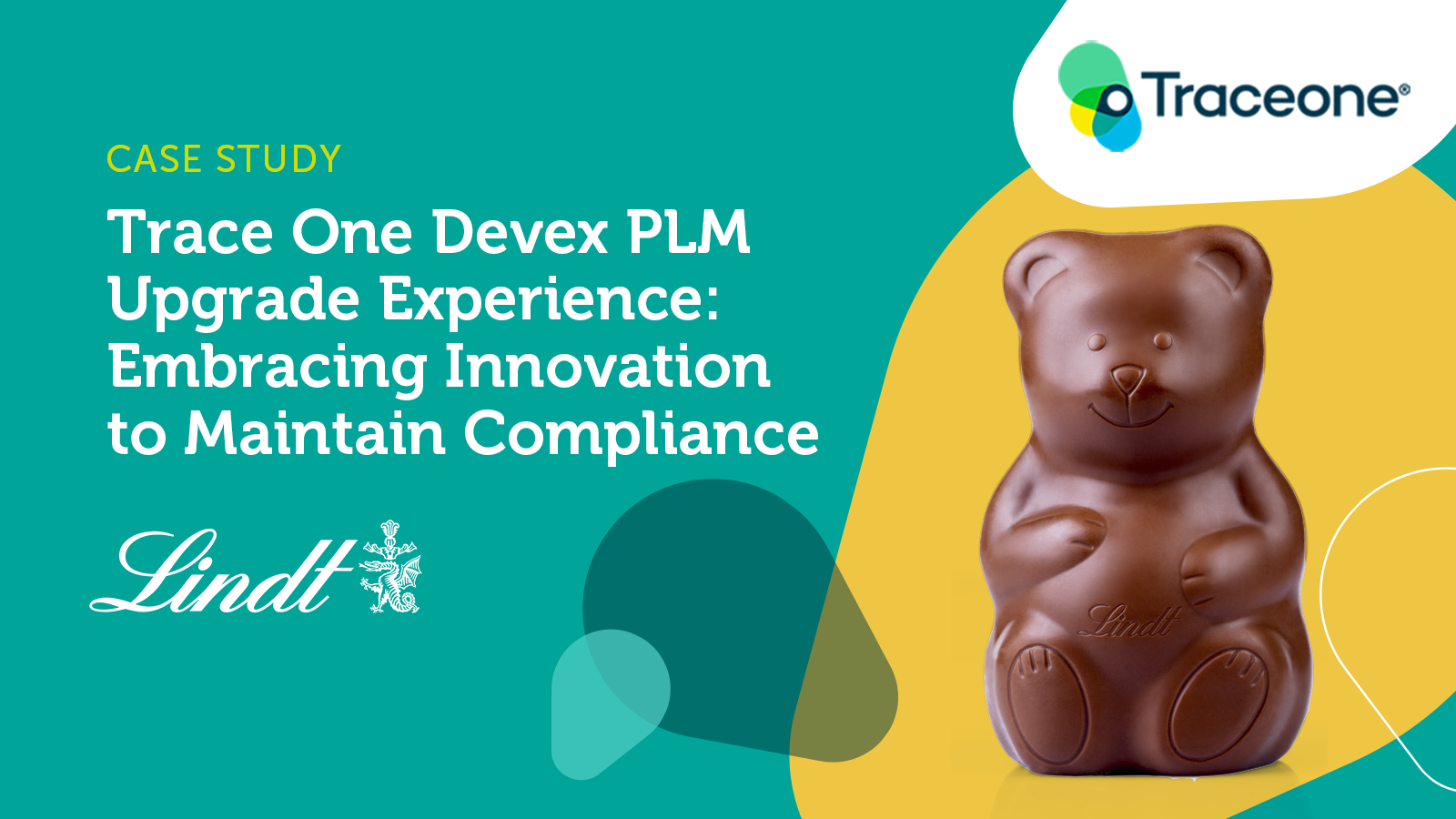
When Lindt & Sprüngli needed to modernize product lifecycle management across multiple brands—including Ghirardelli, Russell Stover, and Caffarel—they chose to upgrade with Trace One rather than switch providers. After a structured co-development process, the move to cloud deployment reduced duplicate workloads, streamlined supplier pre-screening, and gave product developers a faster path from recipe to shelf. 

Read their story
Trace One Case Study

How Does PLM Integration with ERP and Enterprise Systems Work?

For process manufacturers, PLM-ERP integration is the foundation of a connected product lifecycle. When the two systems sync, data moves cleanly across product formulation, procurement, production, and finance. When they don’t, teams face version-control issues, manual workarounds, compliance risks, and delays that often force companies to rethink their software stack.

Integrated data flows aren’t just simple exports. The best PLM-ERP integration software enables true bi-directional connection that pushes specifications, ingredients, packaging details, and more from PLM to ERP software. The best PLM-ERP integration software enables real-time supplier, cost, and inventory data to flow back to the PLM system. This shared source of truth eliminates silos and strengthens decisions across R&D, regulatory, and operations teams.

Trace One PLM transforms integration into a low-friction process with flexible APIs and faster, lower-maintenance deployment. As a PLM partner with proven enterprise-grade integration capabilities, Trace One minimizes those risks, creating a stable, scalable ecosystem where systems align seamlessly and teams move faster with greater confidence.

According to an independent Total Economic Impact™ study of Trace One Devex PLM, packaging engineers save 4–8 hours per week through integrated workflows, and teams that previously needed three months to gather data for reports can now generate them in seconds. Bi-directional ERP integration eliminates manual data entry and ensures specifications, ingredients, and packaging details flow seamlessly between PLM and ERP systems. 

Read Full Case Study

ddefe95f342595fe97523bee59e0f46beb929954

How Do You Calculate Total Cost of Ownership and ROI for PLM?

Understanding relative PLM cost depends on conducting extensive comparisons that include implementation, customization, integrations, data migration, user training, support, and the long-term expense of upgrades. Many teams underestimate these factors, especially when legacy systems rely on custom code that’s difficult and costly to maintain.

TCO is only one side of the equation. An independent Total Economic Impact™ study of Trace One Devex PLM found 70% ROI and a 16-month payback period for a composite organization. Three-year risk-adjusted benefits totaled $6.06M, including $2.66M from faster time-to-market and $2.43M from increased operational productivity. Meaningful ROI comes from improved compliance, fewer reformulations, stronger data accuracy, and faster time-to-market. These gains often outweigh direct cost savings, particularly as many manufacturers struggle to achieve the returns they initially projected for complex PLM projects.

By evaluating both TCO and ROI through a comprehensive PLM software comparison, manufacturers can move beyond just balancing upfront costs and invest in a solution that strengthens product development speed, transparency, and long-term competitiveness.

Trace One’s PLM solutions revolutionize your approach to maintenance and upgrades by adapting to your processes and scaling with your business. We can help you reimagine how you measure impact across R&D, regulatory, quality, and operations teams, not just as IT expenses.

The numbers support the TCO advantage of cloud PLM solutions. In addition to IT expenditures, cloud providers offer redundancy, mirroring, and failover coverage.

Explore the factors that contribute to TCO and ROI for your PLM solution.  


What Should You Expect from PLM Support and Implementation?

Choosing a PLM solution provider is more than a software decision. It also represents the beginning of a long-term relationship. For manufacturers, PLM vendor support often determines whether a system delivers sustained value or becomes a daily frustration. As a result, evaluating your potential partner’s onboarding, training, and change-management resources is just as important as reviewing features.

The vendor you select should include clear support SLAs, transparent escalation paths, and proof that it can guide global teams through complex implementations. Responsiveness is also crucial. When regulations evolve or internal processes shift, you need a partner who can adapt quickly, without blockers from ticket queues or rigid release cycles.

Implementation and scalability are important considerations. Over time, your business will grow, product lines will expand, and digital requirements will change. The right PLM partner helps you navigate that evolution with ongoing guidance, roadmap alignment, and proactive communication.

As you compare systems, keep one question in mind: could you partner with this vendor for years? Trace One acts as a true collaborator to set the foundation for faster innovation, stronger compliance, and long-term operational confidence.


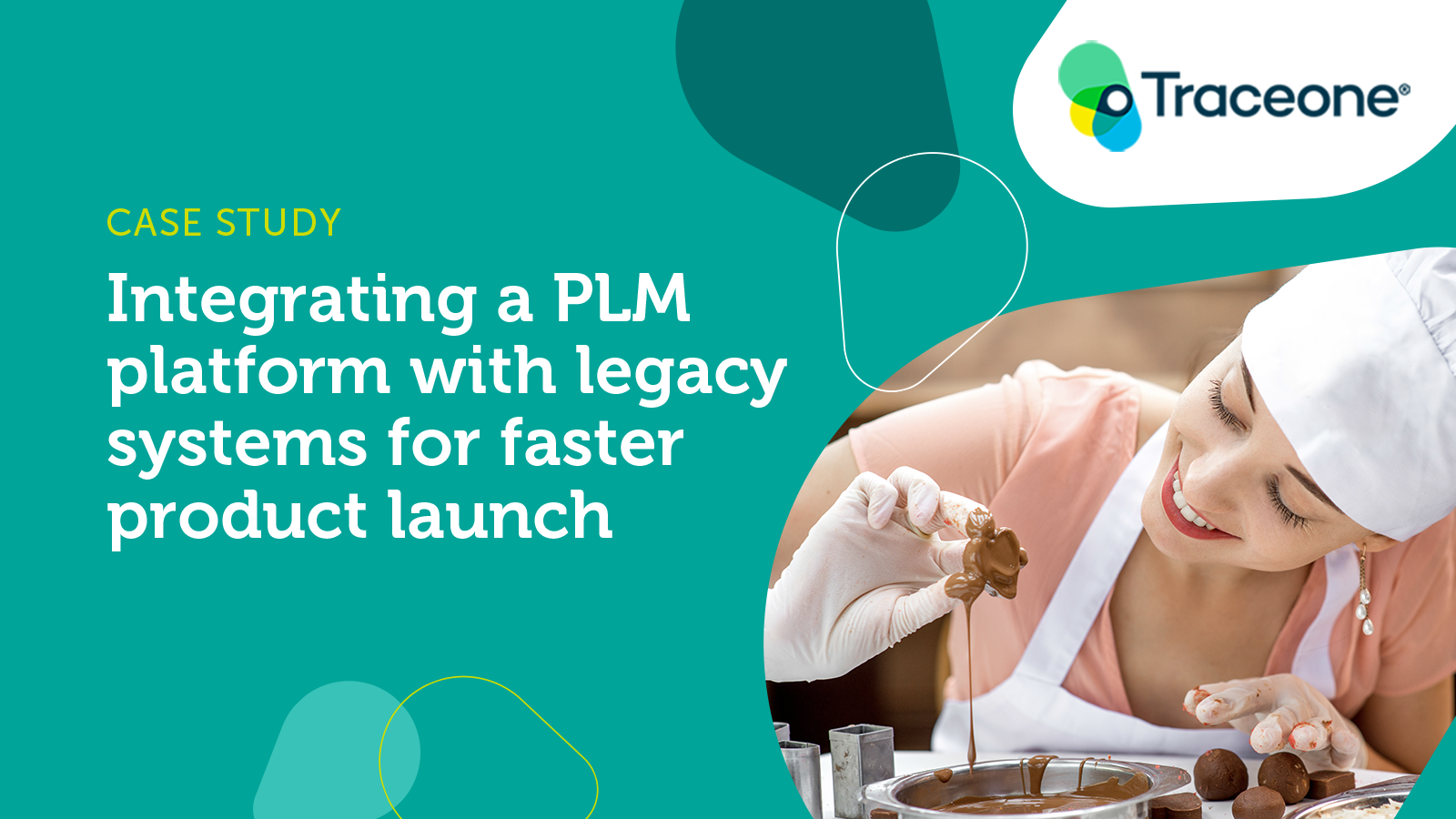
A US-based specialty confectionery manufacturer needed to overcome disparate systems and manual data transfers for a 150-product portfolio generating $285M in revenue. By partnering with Trace One on a phased, methodical rollout, the company implemented a connected data hub, integrating key systems across the product lifecycle to minimize disruption while laying the foundation for faster, more reliable product launches. 


Read their story
Trace One Case Study


Key Takeaways:

  • The best PLM software is defined by fit, not features. A good fit includes industry expertise, integration, usability, support, and TCO.

  • Deep regulatory knowledge and seamless ERP integration are essential for scaling safely in complex markets.

  • Long-term success depends on choosing a PLM partner that evolves with your business, not just a tool for today. 


What Are the Most Common Mistakes When Choosing a PLM Provider?

Manufacturers frequently make damaging mistakes choosing PLM systems. We’ve identified some of the common patterns that arise during this process.

    • Underestimating Integration Complexity
      PLM software touches R&D, regulatory, quality management, sourcing, and ERP systems, so deployment requires strong cross-functional coordination and a vendor with proven integration expertise. When companies overlook these, they often face delays, unexpected costs, and rigid customizations that are difficult to maintain.
    • Misjudging Implementation Needs
      Teams assume connectivity will be seamless, only to discover limited APIs, incomplete data mapping, or one-way integrations that create new silos. While decision-makers focus on features, vendor support is an afterthought. From there, slow response times and weak onboarding creep into day-to-day operations.
    • Focusing on Surface-level Details
      A polished UI or impressive demo can overshadow deeper needs like scalability, regulatory coverage, and the ability to support complex product portfolios. A solution that seems simple for one market can fall short when it expands across categories or countries.

Avoiding PLM selection errors means looking past simple checklists of features and capabilities, examining the full picture to ensure your PLM investment can grow with your business.

Key Takeaway: 

  • PLM selection often fails when companies underestimate integration and cross-functional complexity.
  • Weak implementation planning and support can turn promising platforms into long-term liabilities.
  • Looking beyond demos and surface features helps ensure your PLM system can scale, comply, and evolve with the business.


How Does Trace One Help You Choose or Switch PLM with Confidence?

Choosing a PLM provider is a defining decision, especially for manufacturers responsible for navigating highly regulated industries, shifting consumer expectations, and growing pressure to innovate.

Unlike platforms built for discrete manufacturing, we purpose-built Trace One’s PLM solutions for process manufacturers from day one. That’s why our compliance logic, formulation management, and supplier collaboration work capabilities meet the specific needs of food and beverage, cosmetics, and specialty chemicals manufacturers.

Compliance You Can Trust 
70% average ROI with a 16-month payback period and $6.06M in three-year benefits, according to an independent Total Economic Impact™ study of Trace One Devex PLM. We don’t just store compliance data. We build regulatory logic into every workflow. When the EU updates regulations affecting permitted additives, Trace One’s Food News Monitoring System flags the change, giving teams advance visibility before the regulation enters into force. 

Balanced Usability Designed for Reality 
Manage complex formulations, packaging, and compliance demands. Trace One solutions balance simplicity with depth, supporting cross-functional collaboration while giving technical users the tools they need. 

Accelerating Innovation with AI 
Streamline end-to-end tasks using Trace One’s growing array of AI tools that include built-in intelligence, document extraction, and agentic assistance. To maintain flexibility, your organization can use our AI solutions regardless of your implementation, whether it’s cloud, on-prem, or private, with the ability to bring your own models and integrate third-party solutions. 

ERP Integration that Eliminates Silos 
Reduce manual work, errors, and delays across formulation, procurement, and production through enterprise-grade integrations that create a bi-directional flow of product, supplier, costing, and inventory data. 

Partnership Built to Last 
Capture ongoing success that doesn’t end at implementation. With structured onboarding, responsive global support, and continuous optimization, Trace One invests in our customers as collaborative partners. 

 This decision starts with information, and Trace One can be your trusted partner as you navigate this critical inflection point. As you explore the PLM benefits and capabilities that matter most for your business, we can deliver the solutions, experience, support, and future-ready intelligence to help you move forward with confidence. Bring leading products to market faster with Trace One’s PLM solutions.  


Conduct our PLM Readiness Assessment 
Answer 7 questions about your current product development process. We'll show you where gaps exist and what switching to a modern PLM could unlock. 


Key Takeaway:
  • Trace One’s PLM is purpose-built for process manufacturers, with compliance logic, formulation management, and supplier collaboration designed for regulated industries from day one.

  • An independent Total Economic Impact study found 70% ROI, a 16-month payback period, and $6.06M in three-year benefits for Trace One Devex PLM customers.

  • Enterprise-grade ERP integration, AI-powered intelligence, and a long-term partnership model differentiate Trace One from PLM vendors that retrofit discrete manufacturing tools for process industries.


Frequently Asked Questions: Choosing the Right PLM

What are the key criteria for selecting PLM software?

 Look for a PLM system that meets your functional needs today and scales for tomorrow. Prioritize strong ERP integration, built-in compliance support, intuitive usability, and a transparent total cost of ownership (TCO). Together, these factors ensure your PLM can support fast, accurate, and compliant product development across global teams.  

How do you know when it’s time to switch your PLM provider?

It may be time to switch if your current PLM creates complexity instead of reducing it. Warning signs include poor integration, limited scalability, manual workarounds, outdated UX, or gaps in compliance workflows. If your PLM slows launches or frustrates users, a more modern provider can deliver immediate relief and long-term value. 

Should you choose cloud or on-prem PLM?

Cloud PLM platforms offer scalability, faster updates, and lower upfront costs, making it ideal for teams that need to prioritize agility and reduce IT burden. On-prem PLM implementations offer maximum control and customization but require more resources to maintain. The right choice depends on your security requirements, infrastructure maturity, and long-term digital roadmap. 

How do you measure ROI after PLM implementation?

ROI becomes clear when product development moves faster, with fewer errors. Track improvements in time-to-market, reduction in compliance or labeling mistakes, increased cross-team collaboration, cost avoidance from better data accuracy, and overall user adoption. These metrics reveal how effectively the PLM system you choose strengthens your product lifecycle and operational performance. 

What is the total cost of ownership of PLM?

Total cost of ownership (TCO) for PLM includes licensing fees, implementation, customization, data migration, user training, ongoing support, and the long-term expense of upgrades and maintenance. Many organizations underestimate these hidden costs, especially when legacy systems rely on custom code. An independent Total Economic Impact study found that retiring legacy software alone saved Trace One customers $577K over three years. Evaluating TCO alongside ROI gives a complete picture of your PLM investment. 

How should PLM integrate with ERP and other systems?

PLM should integrate with ERP, QMS, and supplier systems through bi-directional data sync that pushes specifications, formulations, and packaging details from PLM to ERP while returning real-time supplier, cost, and inventory data. The best PLM-ERP integration eliminates manual data entry, prevents version-control issues, and creates a single source of truth across R&D, regulatory, procurement, and operations. Look for flexible APIs and pre-built connectors rather than rigid, custom-coded integrations that are expensive to maintain. 

How do you evaluate PLM vendor support and change management?

Evaluate PLM vendor support by examining onboarding programs, support SLAs, escalation paths, and proof of successful global implementations. Strong change management resources—including training, documentation, and dedicated customer success teams—are critical for adoption. Ask for customer references who can speak to the vendor’s responsiveness when regulations change or internal processes shift. The best PLM partners invest in your long-term success, not just the initial deployment. 

What regulatory and compliance features should PLM support?

For regulated industries, PLM should include embedded allergen management, nutrition and labeling logic, audit-ready specifications, ingredient documentation that updates as regulations evolve, and multi-market compliance support across FDA, EU, and international frameworks. Generic PLM tools often treat compliance as an add-on module, while purpose-built solutions for process manufacturers integrate regulatory intelligence directly into formulation and product development workflows. 

What are the benefits of PLM for food, beverage, and CPG?

PLM benefits for food, beverage, and CPG manufacturers include faster time-to-market, centralized product data, automated compliance checks, streamlined supplier collaboration, and reduced reformulation cycles. An independent Total Economic Impact study of Trace One Devex PLM quantified these benefits at $6.06M over three years for a composite organization, with $2.66M from faster time-to-market and $2.43M from increased operational productivity. PLM also reduces recall risk by maintaining audit-ready documentation and real-time regulatory visibility.  

What mistakes do companies make when choosing PLM?

The most common PLM selection mistakes include underestimating integration complexity across ERP, QMS, and supplier systems; focusing on surface-level demos rather than evaluating scalability and regulatory depth; misjudging implementation timelines and change management requirements; and overlooking vendor support quality. Many organizations also fail to assess total cost of ownership beyond licensing, missing hidden expenses in customization, data migration, and ongoing maintenance that erode projected ROI. 

What happens if my product crosses process and discrete manufacturing?

Some products contain both process (formulated) and discrete (assembled) components:

Example Scenarios: - Liquid cosmetics (process) in mechanical pump dispensers (discrete) - Packaged food products (process) with display cartons and promotional items (discrete) - Cleaning chemicals (process) with spray bottles and trigger assemblies (discrete)

Solution Approaches:

Option 1: Use Process PLM as Primary System
If the formulated component is the primary value and complexity driver, use process PLM (Trace One) for recipe and regulatory management. Manage discrete packaging components through simpler BOM tools or ERP systems.

Option 2: Use Discrete PLM as Primary System
If assembled components dominate complexity and value, use discrete PLM for mechanical parts and manage formulations through recipe management modules or separate tools.

Option 3: Specialized Integration
Large manufacturers with significant complexity in both areas sometimes maintain separate PLM systems with integration layers. This creates higher total cost but provides optimal functionality for both manufacturing types.

Most hybrid manufacturers find one manufacturing type dominates complexity and should drive PLM selection.

Trusted by Global Industry Leaders Trace One is trusted by over 9,000 global brands

This includes world-leading brands in the food and beverage, cosmetics, and specialty chemical industries like Barilla, Ocean Spray, Suntory Global Spirits, Brown-Forman, Bacardi, Mars Wrigley, Ferrero, McCormick, Lindt & Sprüngli, Ghirardelli, Cargill, Innocent, Ahold Delhaize, Tesco, Carrefour, Monoprix, Campari, Moët Hennessy, UNFI, AAK, Naos, Glico, Europastry, Continental Mills, Sensient, Francap, and Franprix.

  • Auchan
  • Barilla
  • Cargill
  • OceanSpray
  • Mars Wrigley
  • Ferrero
  • Sensient
  • Brown-Forman
  • McCormick
  • Continental Mills
  • Ghirardelli
  • Lindt & Sprüngli
  • Bacardi
  • Innocent Drinks
  • Ahold Delhaize USA
  • Europastry
  • Carrefour
  • Glico
  • Moet Hennessy
  • UNFI
  • Monoprix
  • Francap
  • Franprix
  • Tesco
  • AAK
  • ElectroDepot
  • Campari
  • NAOS
  • Post Consumer Brands

Let’s Get in Touch

Connect with us to learn how Trace One can serve your organization’s unique needs.