
|
Product Lifecycle Management
|
Blogs
Posted By:
Federico Fontanella, PMP
QUICK ANSWER |
|
Q: Where are norovirus outbreaks most common in the U.S.? Norovirus outbreaks are most common in the Midwest, with Wisconsin reporting the most of any state (1,739 outbreaks, or 8.3% of the national total) from 2014 to 2023. Adjusted for population, Rhode Island ranks first, with more than 603 outbreaks per million residents. Outbreaks occur most often in long-term care facilities such as nursing homes (11,939 outbreaks) and peak in January, February, and March. Source: Trace One analysis of CDC National Outbreak Reporting System data |
Often referred to as the “winter vomiting bug,” norovirus is the leading cause of vomiting and diarrhea from acute gastroenteritis nationwide and is responsible for a significant share of foodborne illness outbreaks, according to the Centers for Disease Control and Prevention (CDC). Its high transmissibility, coupled with its resilience on surfaces and in various settings, makes norovirus particularly difficult to contain once it begins to spread. For food producers and retailers, outbreak patterns like these drive reformulation decisions, sanitation protocol updates, and supplier qualification requirements — all of which need to flow through a centralized Product Lifecycle Management system to be acted on at speed.
While norovirus can affect anyone, certain populations are at higher risk for severe outcomes, including young children, older adults, and individuals with compromised immune systems. In many cases, symptoms such as vomiting, diarrhea, and dehydration can lead to hospitalization. The risk of infection often rises during the winter holiday season, when families and friends gather indoors and share food—conditions that are especially favorable to the spread of norovirus.
To better understand where these risks come to fruition most commonly, Trace One—a PLM and regulatory compliance software company for the food and beverage sector—analyzed the latest CDC National Outbreak Reporting System (NORS) data and investigated the times of year when norovirus outbreaks are most prevalent, along with the most frequent locations and environments for these occurrences.
What Time of Year Do Norovirus Outbreaks Occur?
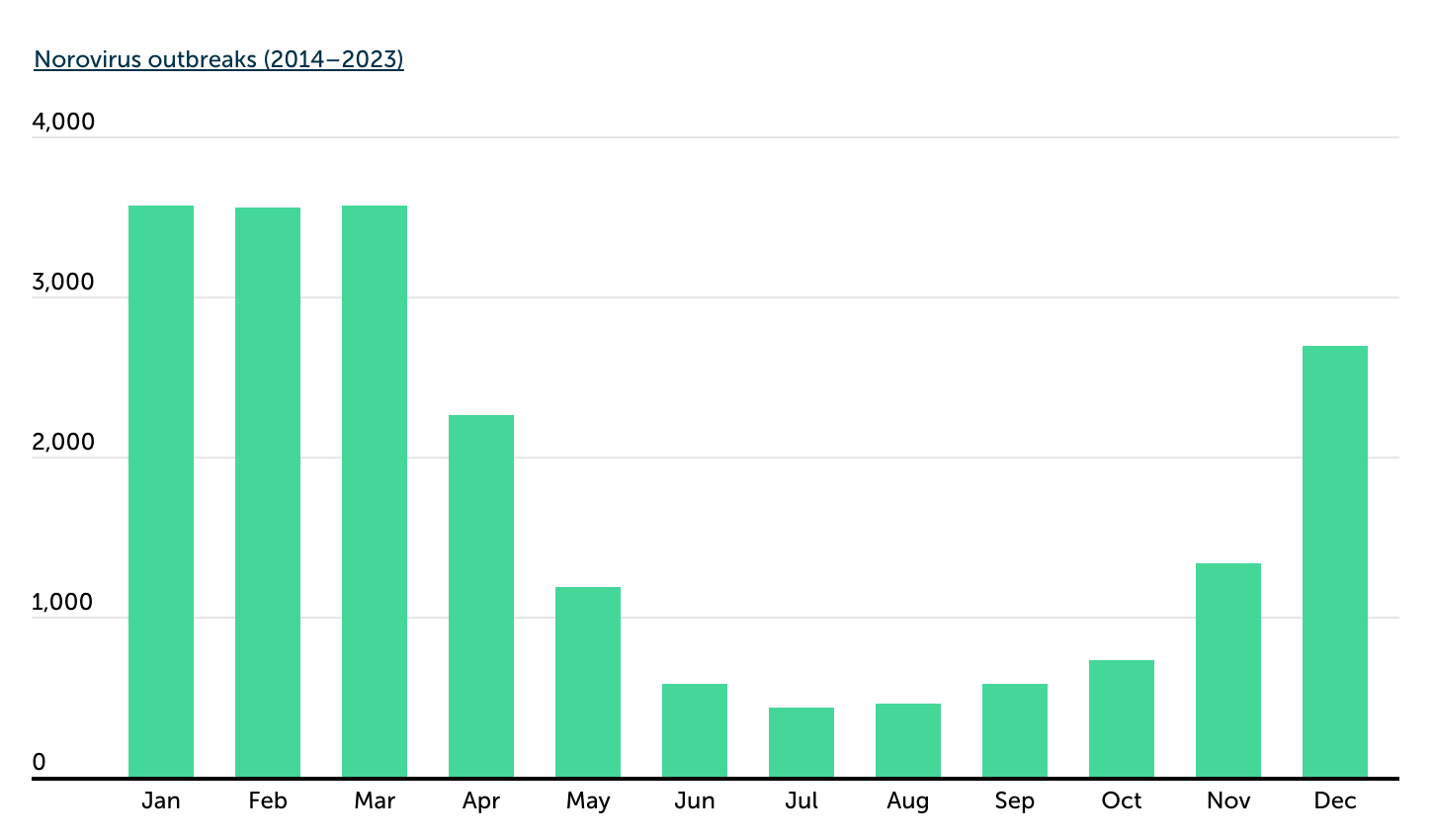
Norovirus outbreaks peak in the winter months and extend into the spring
Trace One analysis of CDC data | Image Credit: Trace One
Norovirus activity consistently begins to rise during the winter months and remains elevated into early spring. From 2014 through 2023, the highest number of outbreaks occurred in January, February, and March, with each month recording more than 3,500 outbreaks nationwide. These three months alone accounted for more than half of all reported norovirus outbreaks during the 10-year period.
This winter concentration aligns with what public health officials have long observed. Norovirus spreads more readily in indoor environments, where people are in closer proximity during colder months and where the virus can persist on surfaces for extended periods. The seasonality mirrors other gastrointestinal illnesses that tend to rise in the winter, when shared spaces and group activities increase exposure risk. Conversely, summer months saw far fewer outbreaks, with the lowest levels in July and August—each with fewer than 500 outbreaks over the decade.
How Food Safety Depends on Strong Compliance Systems
Navigating shifting labeling rules and safety standards is a major challenge for food manufacturers. Robust regulatory compliance software helps centralize requirements, document processes, and verify that every product meets mandated guidelines—critical safeguards that reduce the risk of errors, oversights, and conditions that can contribute to norovirus contamination events.
The Most Common Environments for Norovirus Outbreaks
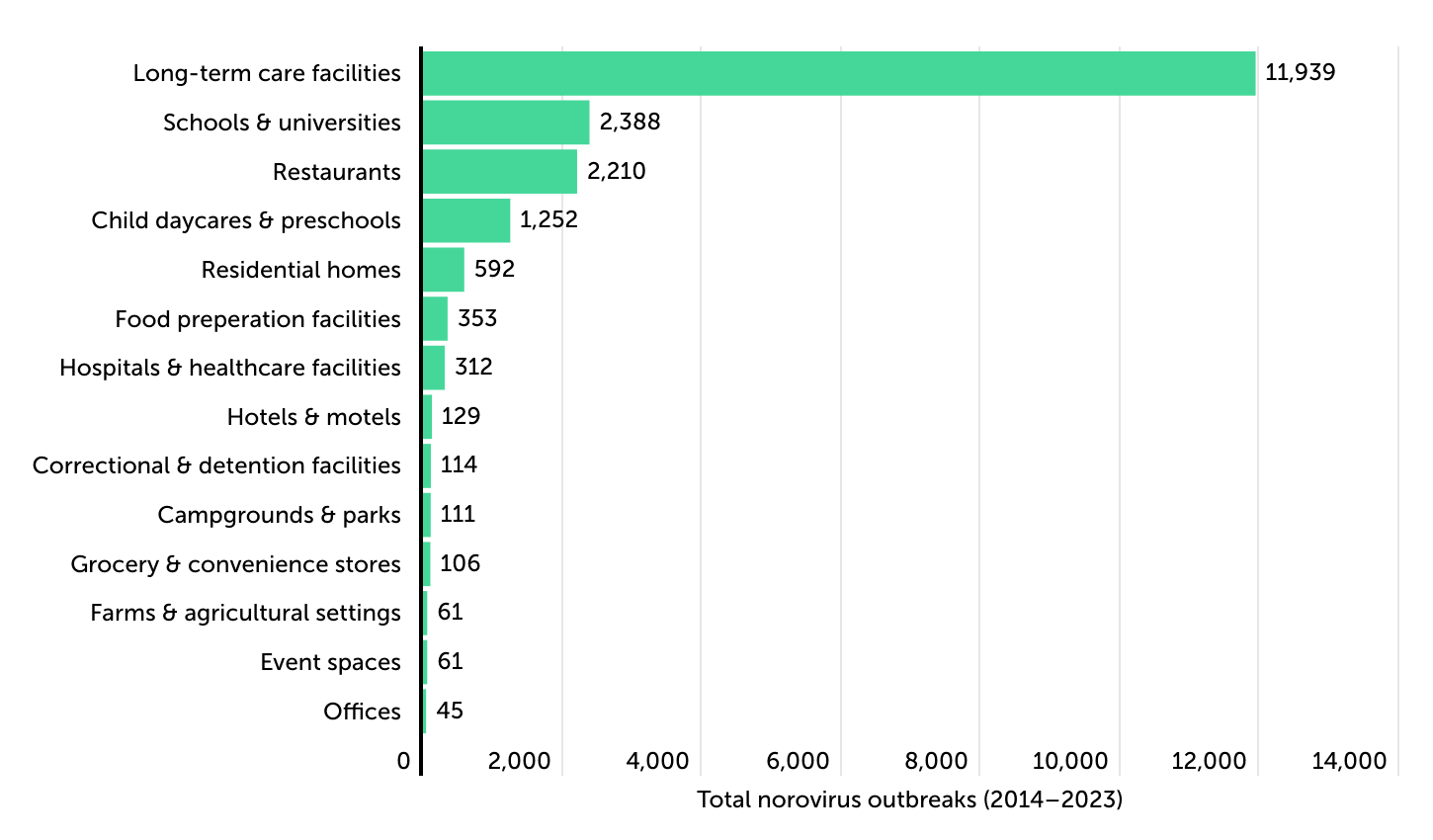
Norovirus outbreaks most commonly occur in long-term care facilities, such as nursing homes and assisted living
Trace One analysis of CDC data | Image Credit: Trace One
Long-term care facilities were by far the most common setting for norovirus outbreaks, accounting for 11,939 outbreaks over the past decade—nearly five times as many as the next most frequent setting. These facilities, which also include nursing homes and assisted living facilities, are especially vulnerable due to the close contact between residents and staff, communal dining, and the elevated risk of severe illness among older adults.
The next most common environments were schools and universities (2,388 outbreaks), restaurants (2,210 outbreaks)—including fast food establishments, banquets, and buffets in addition to traditional sit-down restaurants—and child daycares and preschools (1,252 outbreaks). Outbreaks were also commonly reported in hospitals, residential homes, and food preparation sites—all locations where close quarters, shared surfaces, or group dining contribute to rapid transmission.
PLM and Food Safety Tracking
Preventing outbreaks starts long before a product reaches the consumer. Effective regulatory compliance and PLM solutions allow food companies to monitor every step of production, from ingredient sourcing to packaging. By maintaining accurate, real-time records, manufacturers can respond quickly to potential contamination events—helping reduce the spread of norovirus and other foodborne illnesses.

Geographic Differences in Norovirus Outbreaks
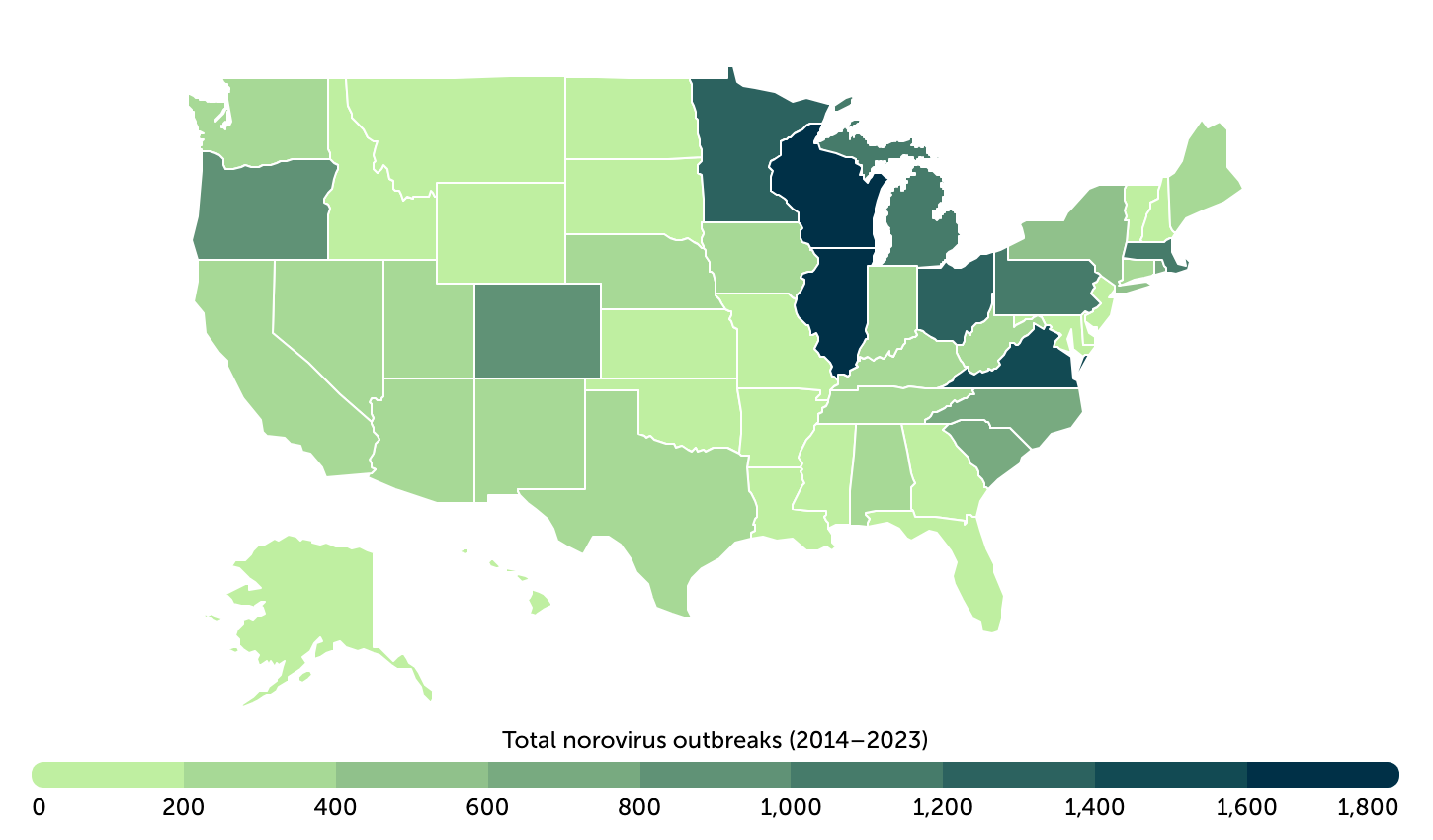
States in the Midwest experience the most norovirus outbreaks
Trace One analysis of CDC data | Image Credit: Trace One
Across the United States, norovirus outbreaks are not evenly distributed. States in the Midwest accounted for a disproportionate share of reported outbreaks over the past decade. Wisconsin, Illinois, Minnesota, Ohio, and Michigan all ranked within the top 10 states for total outbreaks. Wisconsin alone reported 1,739 outbreaks—representing 8.3% of the national total—the highest total in the country.
At the other end of the spectrum, states with the fewest reported outbreaks tended to be more rural or less densely populated. South Dakota, Oklahoma, and Arkansas reported fewer than 15 outbreaks during the entire period each. However, low numbers do not necessarily indicate low transmission; underreporting, limited public health capacity, or different surveillance priorities may also contribute to these lower figures.
When adjusting for population, the rankings shift significantly. Rhode Island, for example, ranks just 12th in total outbreaks but 1st when normalized by population, with more than 603 outbreaks per million residents—over double the per capita rate of any other state. Maine, which ranked 23rd in total outbreaks, rises to 5th place on a per capita basis, with 173 outbreaks per million residents. Other states that rise significantly in the rankings after adjusting for population include Oregon (203.4 outbreaks per 1M residents), Nebraska (163.1 outbreaks per 1M residents), and Wyoming (160.0 outbreaks per 1M residents), suggesting that outbreak risk is not solely a function of total population, but also shaped by demographic, institutional, and reporting dynamics within states.
For a complete breakdown of outbreaks and illnesses across all 50 states and Washington, D.C., including national share and per-capita rates, see the tables below.
Methodology
To find the states where norovirus outbreaks are the most common, researchers at Trace One analyzed the latest data from the Centers for Disease Control and Prevention’s (CDC) National Outbreak Reporting System (NORS). The researchers ranked states by the number of norovirus outbreaks from 2014 through 2023, the latest 10-year period with outbreak data. A norovirus outbreak was considered to be any reported outbreak with norovirus listed as one of the documented etiologies. NORS considers an outbreak to be two or more cases of a similar illness that are linked by a common exposure. Researchers also calculated total norovirus illnesses, norovirus outbreaks as a share of the national total, norovirus illnesses as a share of the national total, norovirus outbreaks per one million residents, norovirus illnesses per 1 million residents, and the most common exposure setting. For relevance, state calculations only included single-state outbreak records, while national data included both single-state and multi-state outbreaks.