
.png?width=570&height=650&name=Trace%20One_Sustainability%20(4).png)
Supply chain sustainability is the practice of integrating environmental stewardship, social responsibility, and ethical governance practices into every stage of the product journey. From raw material sourcing to manufacturing, distribution, and end-of-life management, it represents a holistic approach to logistics and operations that balances profitability with positive impact—aligning business growth with planetary health and human welfare.
Sustainability is the responsibility of every industry, but the pressure is especially high for food and beverage and cosmetics and personal care manufacturers. These industries face mounting demands from consumers who expect transparency about product origins, regulators who enforce escalating standards, and investors who increasingly evaluate companies through an ESG lens. A single product might involve dozens of suppliers across multiple continents, each with different environmental practices, labor standards, and regulatory requirements.
.png?width=570&height=650&name=Trace%20One%20Supply%20Chain%20Sustainability%20(8).png)
From both a compliance and brand trust perspective, transparency, reduced waste, and ethical sourcing are essential pillars of sustainable supply chain programs. When you can trace ingredients back to their origins, you gain visibility into environmental impacts like carbon emissions and water consumption while ensuring fair labor practices and responsible land use. This visibility isn’t just about meeting regulatory requirements—it also helps you build resilience into operations and protect against supply disruptions.
Implementing sustainable practices relies on sophisticated tools that can manage complex data across global networks. Modern supply chain sustainability software gives you the power to measure, analyze, and optimize your environmental and social impact at every touchpoint—transforming sustainability from an abstract goal into actionable business intelligence that delivers both compliance and competitive advantage.

Why Supply Chain Sustainability Matters
Supply chain sustainability has evolved from a corporate social responsibility initiative to an integral business imperative. The question isn’t whether to prioritize sustainability—it’s how quickly you can implement meaningful change to remain competitive and compliant.
Regulatory pressure is mounting, especially for food and beverage producers. Climate disclosure requirements, extended FSMA regulations, and mandatory ESG reporting are reshaping the compliance landscape globally. The European Union’s Corporate Sustainability Reporting Directive (CSRD) and similar legislation in other regions require companies to demonstrate measurable progress on environmental and social metrics. Non-compliance carries financial penalties and can restrict market access.
At the same time, Extended Producer Responsibility (EPR) schemes are expanding globally, holding manufacturers financially accountable for the end-of-life management of their packaging—from collection to recycling. The EU’s Packaging and Packaging Waste Regulation (PPWR) takes this further by mandating recyclability requirements, recycled content minimums, and reduction targets that will fundamentally reshape how food and beverage companies design and source packaging materials.
Changing consumer expectations are also reshaping purchasing decisions. Today’s shoppers actively seek brands that align with their values, scrutinizing everything from ingredient sourcing to packaging waste. A transparent, sustainable supply chain is a powerful differentiator that builds brand loyalty and justifies premium pricing.
.png?width=1536&height=1024&name=Trace%20One%20PLM%20Supply%20Chain%20Sustainability%20(1).png)
.png?width=1000&height=667&name=Trace%20One%20PLM%20Supply%20Chain%20Traceability%20(2).png)
The benefits of sustainable supply chain practices reach into every aspect of your business. By applying sustainable solutions across the value chain, you reduce emissions, enhance resource utilization, and improve operational resilience. Eliminating waste, minimizing energy consumption, and optimizing transportation routes translates to significant cost savings. Supply chain diversification and ethical sourcing also mitigate risk, protecting your business from disruptions caused by climate events, regulatory changes, or reputational crises.
Key TakeawaySupply chain sustainability is no longer optional. CSRD, PPWR, and EPR regulations are creating enforceable compliance requirements, while consumer expectations for transparency and ethical sourcing make sustainability a direct driver of brand loyalty, cost savings, and market access. |

Environmental Sustainability
The environmental pillar addresses a company’s ecological footprint throughout the value chain. It includes measuring and reducing greenhouse gas emissions from transportation and production, optimizing water consumption in water-stressed regions, minimizing packaging waste through lightweighting or recyclable materials, and preventing food waste at every stage. For example, a beverage manufacturer might analyze the carbon impact of switching from glass to aluminum packaging to align with PPWR recyclability requirements—a decision that requires lifecycle assessment data across the entire supply chain.

Social Responsibility
Supply chain operations have a profound impact on the people involved. Sustainable supply chains maintain fair labor practices and safe working conditions across all supplier tiers, support local communities in ingredient-producing regions, and build equitable, long-term supplier relationships that promote shared value. Examples in the food supply chain include auditing cocoa suppliers for child labor compliance, ensuring living wages for coffee farmers, or partnering with smallholder producers to improve agricultural practices.

Governance and Transparency
Governance provides a framework for making sustainability accountable and verifiable. It encompasses maintaining compliance with evolving regulations across multiple jurisdictions, conducting regular supplier audits and third-party certifications, and establishing end-to-end traceability systems that document product journeys. Strong governance helps manufacturers respond to regulatory inquiries quickly, verify sustainability claims with data, and maintain the trust of retailers, investors, and consumers.
Supply Chain Sustainability in Food and Beverage
The food and beverage industry faces sustainability challenges that are uniquely complex and consequential. Manufacturers must balance environmental responsibility with food safety, perishability constraints, labeling requirements, and intense consumer scrutiny—all while managing supply chains that span the globe.
Perishability creates urgent sustainability pressures. Food waste generates significant greenhouse gas emissions, and reducing it requires precise coordination across supply, production, distribution, and retail. Product recalls compound these challenges, often triggering massive waste events where companies need to remove and destroy contaminated products.
.png?width=1536&height=1024&name=Trace%20One%20PLM%20Supply%20Chain%20Traceability%20(3).png)
.png?width=1536&height=1024&name=Trace%20One%20PLM%20Supply%20Chain%20Sustainability%20(2).png)
Labeling compliance and transparency around the sustainable food supply chain have become critical differentiators. Consumers demand to know not just what’s in their food, but where its ingredients originated, how they were produced, and whether suppliers treated workers fairly. This scrutiny extends to packaging claims—manufacturers must substantiate environmental assertions with verified data or risk regulatory action and reputational damage.
Responsible sourcing practices are especially relevant for food and beverage companies. Whether manufacturers need to ensure palm oil comes from deforestation-free sources, verify ethical fishing practices, or confirm sustainable organic farming through certification, they need systems that validate supplier claims at scale.

Successfully navigating these challenges requires integrated solutions that connect product lifecycle management with sustainability analytics. By connecting stakeholders across your supplier network, modern food supply chain sustainability software improves visibility, traceability, and decision-making.
BEST FORFood and beverage, and cosmetics manufacturers managing complex global supply chains who need to balance perishability, food safety, labeling compliance, and ESG requirements simultaneously—without sacrificing speed to market. |
Book a 15-minute sustainability assessment to see how Trace One helps food and beverage manufacturers embed environmental, social, and governance practices directly into product development workflows.
Book a Demo.png?width=777&height=518&name=Trace%20One%20Master%20Data%20Management%20(2).png)

Key Performance Indicators
Measurement begins with tracking critical environmental and social KPIs. Carbon footprint metrics in supply chain operations encompass Scope 1, 2, and 3 emissions—providing insights into greenhouse gas contributions from direct operations, purchased energy, and supplier activities. Water consumption metrics identify risk exposure in water-stressed regions. Waste generation data highlights opportunities for circular economy initiatives. Social metrics include supplier audit scores, labor practice assessments, and community impact evaluations.
Frameworks and Standards
Measurement approaches should align with established frameworks and standards. The Global Reporting Initiative (GRI) provides comprehensive sustainability reporting guidelines. The Sustainability Accounting Standards Board (SASB) offers industry-specific metrics. The Carbon Disclosure Project (CDP) facilitates climate-related disclosures. And the Science Based Targets initiative (SBTi) helps companies set emissions reduction goals aligned with the Paris Agreement.
Data-Driven Decision Making
Modern sustainability measurement is grounded in sophisticated software solutions that aggregate data across complex supply networks. Supply chain traceability software connects product-level data with supplier-level sustainability performance, enabling granular analysis. By integrating real-time supplier data into lifecycle assessment capabilities, manufacturers can model the environmental impact of formulation changes, packaging decisions, and sourcing shifts before committing to production.

-

Limited supplier data visibility:
Many suppliers, particularly smaller operations, lack systems to track and report sustainability metrics. This creates blind spots in performance assessments.
-

Data collection complexity:
Gathering accurate information across multi-tier supply chains means coordinating with dozens or hundreds of partners, each with different capabilities and willingness to share data.
-

Confidentiality concerns:
Suppliers often resist sharing detailed operational information, viewing it as proprietary business intelligence—even when it’s essential for sustainability assessments.
-

Cost allocation challenges:
Determining who bears the financial burden when sustainability improvements depend on supplier investment can be contentious.
-

Technical fragmentation:
Different suppliers use different tools and standards, making data aggregation difficult without unified platforms.
-

Resource constraints:
Smaller farms and processors may lack the capital and expertise necessary to implement tracking systems or make operational changes.
-
Balancing competing priorities:
Manufacturers need to weigh sustainability against cost, quality, and supply security as they make sourcing decisions.
Future Trends in Supply Chain Sustainability
The landscape of supply chain sustainability is evolving rapidly, driven by technological innovation, regulatory expansion, and shifting consumer expectations. Manufacturers need to prepare for transformations that will fundamentally reshape how they source, produce, and manage products.
.png?width=777&height=518&name=Trace%20One%20Master%20Data%20Management%20(1).png)
Circular economy models are gaining momentum as companies move beyond linear “take-make-dispose” approaches. Circular supply chain strategies emphasize designing for reuse, refurbishment, and recycling to minimize waste while creating new value streams.
Regenerative agriculture goes beyond minimizing harm to actively improve soil health, biodiversity, and carbon sequestration. Manufacturers are partnering with farmers to implement regenerative agriculture practices in the supply chain that restore ecosystems while securing long-term ingredient supplies.
Greater manufacturer responsibility over packaging waste: EPR schemes are expanding globally, signaling a future where authorities hold manufacturers financially accountable for end-of-life packaging management. The EU’s PPWR previews what’s ahead—mandated recyclability requirements, recycled content minimums, and reduction targets poised to fundamentally reshape how companies design and source packaging materials.
.png?width=777&height=518&name=Trace%20One%20Supply%20Chain%20Sustainability%20(1).png)
Digital product passports and enhanced traceability: Consumers and regulators will soon have access to comprehensive product histories. Blockchain technology promises immutable traceability for high-risk ingredients. By 2027, initiatives like GS1’s digital labeling standards will mandate unprecedented transparency.
Digital twins let companies simulate scenarios without real-world trial and error—accelerating product development, minimizing costs, and providing opportunities to optimize sustainability outcomes before production.
Regulatory evolution: ESG supply chain disclosure requirements are expanding globally, with stricter due diligence standards around deforestation, carbon accounting, and human rights.
Key TakeawayThe future of supply chain sustainability is being shaped by circular economy models, regenerative agriculture, expanding EPR/PPWR regulations, digital product passports, and blockchain-enabled traceability. Manufacturers need continuously evolving platforms to stay ahead of these shifts. |
.png?width=777&height=518&name=Trace%20One%20Supply%20Chain%20Sustainability%20(2).png)
Step 1: Assess Your Current State
Conduct a comprehensive baseline assessment of your environmental and social impacts across the supply chain. Map your supplier network, prioritize high-impact categories, and identify data gaps. Start with tier-1 suppliers, where information is easier to obtain through direct relationships. This foundation helps you understand where you stand before defining outcomes.
Step 2: Set Measurable Goals
Establish specific, time-bound metrics aligned with recognized frameworks like Science Based Targets (SBTi) or industry benchmarks. Your goals should address material issues: carbon reduction, water stewardship, waste elimination, and ethical sourcing. Ensure objectives are attainable, with clear ownership and accountability across functions.
Step 3: Engage Suppliers
Most sustainability impact occurs beyond your direct control, so supplier collaboration is essential. Communicate expectations clearly, provide support to help suppliers meet standards, and acknowledge both upstream and downstream challenges. Build long-term partnerships rather than transactional relationships.
Step 4: Pilot and Iterate
Launch pilot programs with select suppliers or product categories to test approaches, refine data collection methods, and demonstrate value. Use pilot results to build internal buy-in and identify best practices before full-scale rollout.
Step 5: Scale with Technology
Technology enablement is critical for scaling sustainability across complex operations. Implement integrated platforms that automate data collection, provide real-time visibility, enable lifecycle assessments, and generate compliance-ready reports. The right systems translate manual processes into strategic intelligence that informs product development, procurement decisions, and stakeholder communications.
.png?width=570&height=650&name=Trace%20One%20Supply%20Chain%20Sustainability%20(7).png)
Role of Technology and Software
Digital tools are the cornerstone of effective sustainability programs. Without robust technology infrastructure, manufacturers struggle to collect, analyze, and act on the complex data required for meaningful impact. Supply chain sustainability software bridges the gap between sustainability ambitions and operational reality.
Modern platforms like Trace One Sustainability integrate multiple critical functions. Product lifecycle management (PLM) systems serve as central repositories where you capture sustainability data in the same environment where you make decisions. By embedding sustainability intelligence directly into PLM workflows, you can evaluate environmental impacts during product development—rather than discovering issues after launch. This unlocks analytical decision-making about sourcing, formulation, and packaging before products reach the market.

Traceability software provides end-to-end visibility across multi-tier supply networks, documenting product journeys from farm to finished goods. Supplier management software facilitates collaboration, enabling manufacturers to collect performance data and monitor compliance across partners. For example, Trace One tools integrate supply chain traceability through our partnership with Connecting Food.
Leading solutions integrate ESG data, supply chain traceability, and risk monitoring to help food companies maintain compliance and optimize sustainability performance. Trace One PLM delivers this integrated approach by connecting product development with sustainability analytics—providing enhanced visibility, supplier quality management capabilities, and centralized specification management within a single platform that eliminates data silos and accelerates sustainable product innovation.

BEST FOR
Food and beverage, cosmetics, and chemicals manufacturers looking for a single platform that connects sustainability analytics, PLM, traceability, and supplier management—rather than managing sustainability in siloed spreadsheets or disconnected tools.
See how Trace One software can help you implement and manage supply chain sustainability—from lifecycle assessment to supplier scoring and compliance reporting.
Supply Chain Sustainability in the Real World
-
.png?width=380&name=TO_CaseStudy_PLM_Feature_Barilla_02%20(1).png)
Digitizing the Pesto all a Genovese Supply Chain to Drive Transparency, Efficiency, and Consumer Trust
In a rapidly evolving agri-food landscape, Barilla has chosen to combine technological innovation with sustainability commitments. Through its collaboration with Connecting Food, the group has digitized the entire supply chain behind its iconic Pesto alla Genovese—laying the groundwork for real-time traceability, smarter risk management, and a stronger connection with consumers.
-
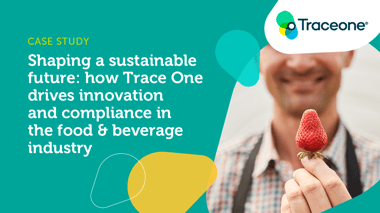
Shaping a Sustainable Future: How Trace One Drives Innovation and Compliance in the Food & Beverage Industry
A major food and beverage manufacturer with $450M in revenue struggled with fragmented sustainability data and manual tracking processes. After implementing Trace One PLM, they achieved 60% faster time-to-market, 80% reduction in data errors, and 50–60% efficiency gains in regulatory reporting.
-
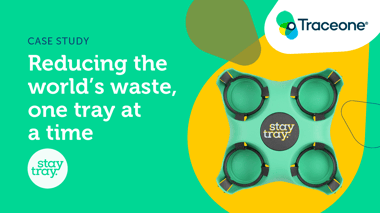
Impressive Environmental Credentials Help Fuel Stellar Growth for Aussie Startup
Stay Tray, an Australian startup producing reusable drink trays from 100% recycled materials, needed to validate their sustainability claims to major quick-service restaurant chains. Using Trace One Sustainability’s Lifecycle Assessment tool, they confirmed their environmental advantage over disposable cardboard alternatives—reinforcing brand credibility and enabling confident engagement with industry partners.