.jpg?width=570&height=483&name=EU-organic-regulation%20(1).jpg)
2027 Deadline Alert US Exporters
The US-EU organic equivalence arrangement will expire by January 1, 2027, unless replaced by a trade agreement. Negotiations are ongoing, the EU commission has recently proposed to extend the equivalence arrangement up to 31 December 2036 (10-year extension).
If your products currently enter the EU under equivalence, you may need full EU organic certification before January 1, 2027 to maintain market access.
Brands that wait for risk shipment blocks, loss of EU organic logo usage, and forced relabeling.
.png?width=1000&height=1140&name=TO%20PLM%20Global%20Food%20Retailer%20Case%20Study%20(2).png)
Which Products and Activities Are Covered?
EU organic rules apply to a surprisingly broad range of products—not just fresh fruits and vegetables. If you're developing formulations, managing suppliers, or preparing European food labels, understanding what falls under Regulation (EU) 2018/848 is critical.
EU organic farming rules cover agricultural products from seeds to the final processed food:
- Plant products: Crops, seeds, plant reproductive materials, sprouted seeds
- Livestock: Cattle, pigs, poultry, rabbits, and beekeeping
- Aquaculture: Fish, algae, mollusks, and crustaceans
- Processed foods and beverages: Packaged goods, wine, spirits, juices, composite products
The 2018/848 regulation expanded Annex I to include:
- Sea salt and rock salt
- Natural, non-agglomerated cork stoppers
- Essential oils (including products not for human consumption)
- Raw cotton and wool that haven’t been carded or combed
- Beeswax
- Silkworm cocoons and raw hides
- Natural gums and resins
Determining which formulations require certification, tracking supplier certifications, and ensuring traceability across complex supply chains demands robust systems and data management to avoid mislabeling or compliance gaps. For your product development and supply chain teams, it's critical to know whether any component falls under these rules, especially when you're sourcing ingredients globally or reformulating existing products.
Managing organic certification across a complex product portfolio?
See how Trace One PLM centralizes formulations and supplier data →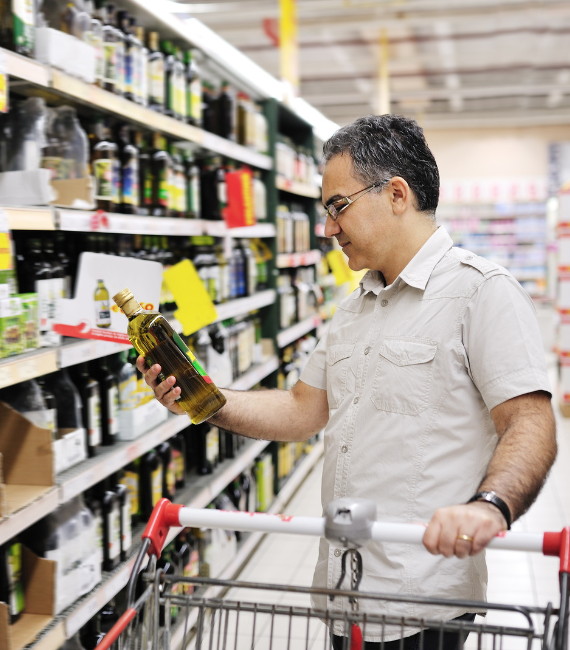
.jpg?width=570&height=650&name=American%20Food%20Innovate%202026_Testimonial%20(2).jpg)
What Are the EU Organic Principles and Standards?
EU organic certification standards take a system-wide approach to prioritize natural processes, sustainability, and transparency. For food and beverage manufacturers, especially companies that formulate processed organic products, understanding these core principles is essential for compliance and supplier management.
Key TakeawayEU organic rules prohibit GMOs, and strictly regulates the use of pesticides and additives. Hormones are forbidden, antibiotics restricted to essential cases. Article 7 establishes that processed organic food must comprise primarily certified organic ingredients, additives are restricted to essential cases, and no engineered nanomaterials are permitted. |
How Does the EU Organic Certification Process Work?
Understanding how to get EU organic certification is essential for any food and beverage brand targeting the European market. The process follows five steps, from initial registration through ongoing annual audits.
Best For:F&B manufacturers exporting organic products to the EU, particularly those managing complex multi-supplier organic supply chains. A Top 5 global dairy company ($20B+ revenue, operating in 140+ countries) uses Trace One to manage supplier certifications across its organic portfolio—achieving the equivalent of 13 FTEs in annual time savings on regulatory documentation alone. |
Key TakeawayMost non-compliance issues appear not during initial certification, but during re-certification, reformulation, or scale-up. A common reason first-time applicants face challenges is incomplete or expired supplier documentation. |

Step 1: How Do You Register with a Recognized Control Body?
Each EU country appoints an EU organic certification body — a control body or control authority — responsible for organic certification. Producers, distributors, and marketers of organic products are responsible for notifying the activity to the competent national authority or control body. To obtain the green EU logo, products need certification from a body approved by the relevant authorities.
Start by selecting an accredited control body like Ecocert or CERES, then submit an application including your operations details, product formulations, supplier certifications, and processing methods.
Step 2: What Happens During the Initial Inspection?
Your control body schedules an on-site inspection to verify compliance with Regulation (EU) 2018/848. Processed food manufacturers need to demonstrate that organic ingredients come from certified sources, additives align with approved lists, and proper segregation and traceability systems are in place.
Common Pitfall: A common reason first-time applicants face challenges is incomplete or expired supplier documentation.
How Trace One Helps: A world leader in liquid food processing (24,000+ employees, 160+ countries) was “spending thousands of hours on painstaking, manual monitoring” of supplier compliance. Now they use Trace One to flag expiring certificates in advance, linked directly to formulations and finished products—turning audit preparation from a scramble into a routine check.
Step 3: How Are Non-Compliance Issues Resolved?
If inspectors identify gaps like missing supplier certifications or unapproved ingredients, you'll receive a corrective action plan. From there, you need to resolve issues within a specified timeframe.
Step 4: What Does Receiving EU Organic Certification Involve?
Once you've verified compliance, the control body issues your certification and assigns a unique operator code that allows you to use the EU organic logo.
Step 5: How Do Annual Audits Work to Maintain Certification?
Certifying bodies check all operators at least once a year, with potential unannounced inspections. It's your responsibility to maintain current records, report formulation changes, and ensure ongoing supply chain compliance.
This cyclical model means EU organic certification is a continuous commitment to transparency and adherence to strict standards.
.png?width=4740&height=2666&name=MicrosoftTeams-image%20(12).png)
What Do Importers and Exporters Need to Know About EU Organic Market Access?
For non-EU producers and exporters, accessing the European organic market means navigating an import framework that has undergone significant changes under Regulation 2018/848. Understanding these requirements is critical for maintaining market access and avoiding shipment delays or rejections.
How Do Non-EU Producers Access the EU Organic Market?
To export organic products to the EU, you will need to work with an EU organic certification body recognized by the European Commission. Control bodies are responsible for carrying out inspections and certification, and all organic operators are subject to at least annual controls.
The import process involves three steps:
- Registering with an approved control body: The organization needs to appear in the official EU register of recognized certification bodies.
- Obtaining organic certification: Demonstrate compliance with EU organic certification requirements through documentation, inspections, and traceability.
- Issuing a Certificate of Inspection (COI): For each shipment, your control body issues a COI via the Trade Control and Expert System (TRACES), which customs authorities use to verify compliance. The COI includes detailed information about the consignment, product categories, and confirmation that products meet EU organic standards.
Depending on your products' country of origin, the procedure may differ. For countries like the UK, the US, and Japan that operate according to specific trade agreements or the EU considers equivalent in terms of organic regulations, control bodies can operate under internal supervision. Manufacturers in all other countries need to go through control bodies recognized and supervised by the European Commission.

What Are the Critical 2025+ Developments for EU Organic Exporters?
US-EU Equivalence Expiration: January 1, 2027
The arrangement expires by January 1, 2027, unless replaced by a trade agreement (10-year extension). Negotiations are ongoing but uncertain.
October 2024 EU Court Ruling: Products from equivalent countries cannot use the EU organic logo unless they fully comply with all EU requirements—not just equivalent standards. This interpretation effectively narrows equivalence agreements.
A European Commission proposal aims to extend arrangements and clarify rules, but the situation is urgent for exporters. At this point, verify your control body's recognition status and prepare contingency plans to protect market access.
What Sector-Specific Organic Regulations Apply to Food Manufacturers?
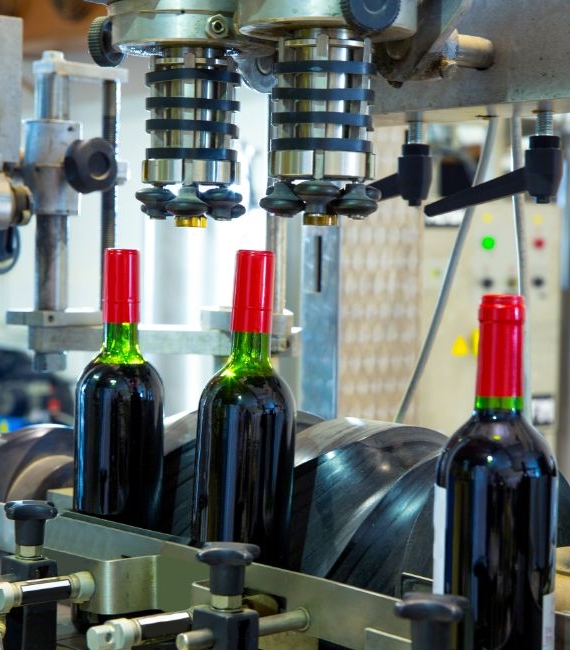
Organic wine needs to follow all standard EU wine law, but with stricter limits: lower sulfite thresholds, no sorbic acid, and tighter controls on oenological practices. Producers are responsible for complying with all relevant legal provisions when processing organic grapes, so precise documentation is critical.
.png?width=570&height=650&name=photo1%20(52).png)
Because essential oils appear in Annex I, they fall fully within the scope of organic EU certification. Their agricultural origin and extraction methods need to align with organic rules around relying on physical or biological processes and avoiding practices that could misrepresent the product's natural character.
.png?width=570&height=650&name=photo1%20(44).png)
Only supplements derived from agricultural ingredients like herbal extracts or plant oils qualify for organic status. Products made primarily from isolated vitamins or minerals fall outside the regulation and can't carry organic claims.
.png?width=570&height=650&name=Global_Flavor_Case_Study_Image%20(2).png)
The flavoring component of natural flavoring substances needs to contain exclusively natural substances. It also has to be obtained at a proportion of at least 95% by weight concentration from source material that reflects the component's taste. Plant-based flavorings also can't come from hydroponic systems, since EU rules prohibit hydroponics, except for plants that naturally grow in water.
Understanding these sector-specific rules equips you to apply the EU organic regulation accurately and design products that meet the European Commission's expectations from formulation through labeling.
-

Input Records
Track all agricultural ingredients, processing aids, and additives with dates, batch numbers, and confirmation that each appears on EU-approved lists.
-

Supplier Certificates
Keep current, valid certificates for every supplier, tied directly to the materials they deliver. Set regular reminders to review expirations and updated scopes.
-

Segregation Procedures
Document how you separate organic and non-organic materials in storage, processing, and packaging. Clear physical or time-based separation is essential to prevent contamination.
-

Traceability Logs
Maintain end-to-end traceability from finished product back to ingredient source. Inspectors should be able to reconstruct the product's entire path within minutes.
-

Mass Balance Checks
Routinely match organic input quantities against outputs. This simple practice catches discrepancies early and prepares teams for one of the most common audit verifications.
-

Audit Reports and Corrective Actions
Archive previous audit results, non-compliance issues, and corrective actions. Consistent follow-through demonstrates control and maturity in your organic program.
A tight, well-maintained documentation system reinforces the credibility of every organic claim and strengthens long-term compliance under the EU organic certification process.
How Does Software Support EU Organic Compliance Management?
Trace One helps F&B manufacturers bring market-leading products to shelves faster—with compliance confidence that protects brand equity and accelerates retailer approvals.
Real-Time Regulatory Monitoring
Trace One Regulatory Compliance actively monitors EU organic regulation and related legislative updates. When Regulation (EU) 2025/2501 (which updated 2021/1165) was published on 11 December 2025, Trace One’s Food News Monitoring System flagged the change—giving teams advance visibility before the regulation entered into force 20 days after publication.

.png?width=1000&height=667&name=Trace%20One%20Supply%20Chain%20Sustainability%20(3).png)
The 6th largest global spirits company (4,000+ employees, 22 production facilities, 190 markets) implemented Trace One Regulatory Compliance in just seven months. Their assessment: “It’s the gold standard for global information and reporting.”
- Centralized PLM: Unify formulations, specifications, and audit-ready records.
- Item Master Data Management: Maintain up-to-date supplier certificates and approval statuses.
- Supplier Collaboration: Streamline certificate collection and validation.
- Substance Compliance Tools: Screen formulations against customer-defined input lists.
Book a 15-minute demo
See how Trace One supports document traceability, formula management, and regulatory monitoring across your product portfolio.